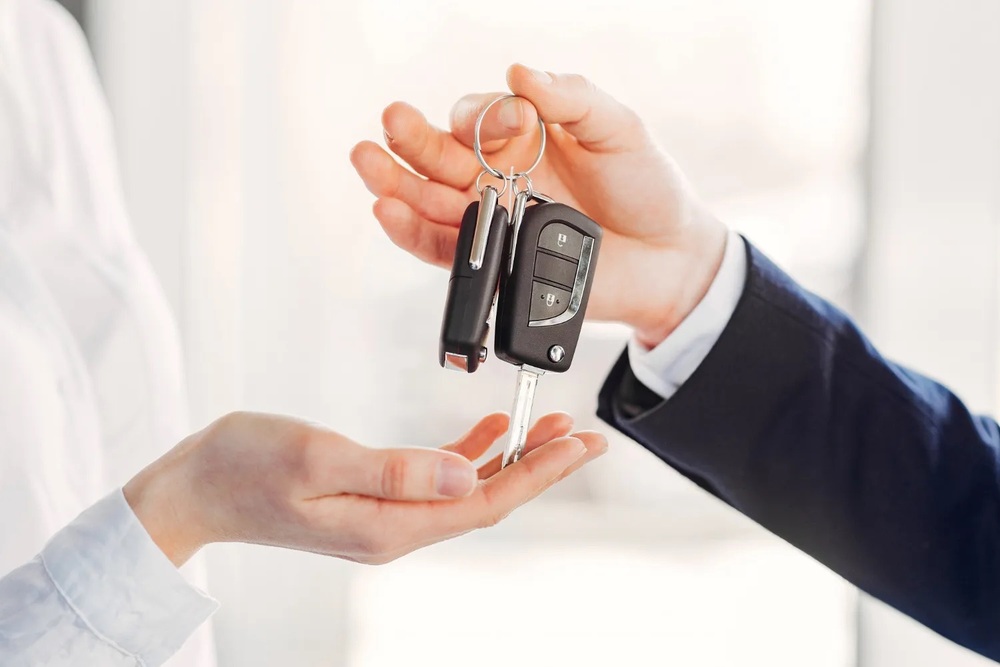
Selling a car privately means fielding calls from unknown numbers, scheduling test drives with strangers, and handling thousands in cash – activities that range from uncomfortable to genuinely risky. Fortunately, 2026 offers safer alternatives that don’t require meeting buyers in parking lots or inviting strangers to your driveway.
Key takeaway
- The safest option is to sell your car to established businesses – such as online buyers, dealerships, or AutoLetGo, since they offer professional pickup and verified payment without needing to meet strangers.
- The typical timeline for this route is around 1–7 days from receiving a quote to getting paid.
- If you choose a private sale, always meet in a public place during daylight hours and bring someone with you for safety.
- Use only verified payment methods, and avoid cash transactions over $1,000 to reduce risk.
- Never meet buyers at your home, and make sure to verify their identity before allowing test drives.
- Services like AutoLetGo can handle inspection and pickup at your preferred location, removing the need to interact with unknown buyers entirely.
Why traditional private sales create safety risks
The private sale process creates multiple vulnerability points. You advertise your contact information publicly, inviting communication from anyone. Test drives put strangers behind the wheel of your car – with you inside. Payment exchanges involve cash or checks that may not clear. And the entire transaction happens outside regulated business environments.
Common risks include test drive theft (buyer drives away and never returns), payment fraud (counterfeit cash, bounced checks, fake mobile transfers), personal safety concerns during meetups in isolated locations, identity theft from paperwork containing personal information, and aggressive negotiation tactics in private settings.
According to Federal Trade Commission guidance, vehicle sales attract sophisticated scams precisely because they involve high-value transactions between strangers. The risks aren’t just theoretical – local news regularly reports incidents involving car sale meetups gone wrong.
Safe selling options compared
Your selling method determines your risk exposure. Here’s how common options stack up on safety, speed, and convenience:
| Selling Method | Stranger Contact | Typical Timeline | Safety Level |
| Online Car Buyers | None (professional pickup) | 1–3 days | Very High |
| Dealership Trade-In | None (business transaction) | Same day | Very High |
| Private Sale (Safe Practices) | Multiple strangers | 2–6 weeks | Medium (with precautions) |
| Private Sale (Typical) | Multiple strangers | 2–6 weeks | Low to Medium |
Online car buying services
Services like AutoLetGo offer the safest transaction path – you never meet the buyer. You submit vehicle information online, receive an instant offer, schedule a pickup at your home or workplace, and receive payment via secure bank transfer or verified check. The inspector who examines your car is a vetted professional, not a potential buyer with unknown intentions.
Timeline: Request quote (5 minutes) → receive instant offer (immediate) → schedule inspection (1–2 days) → vehicle pickup and payment (same appointment). Total time from decision to payment: typically 24–72 hours. The process happens at locations you choose, during hours you specify, with payment methods you verify in advance.
Dealership trade-in
Trading your car when buying another eliminates stranger contact entirely. You negotiate with licensed business representatives in public dealerships with security cameras and oversight. Payment comes through established business channels – usually applied as credit toward your new vehicle or issued as a dealership check.
The tradeoff: dealerships typically offer less than private sale prices because they assume resale risk and reconditioning costs. But the convenience and safety appeal to many sellers who value peace of mind over maximum profit.
If you choose private sale: essential safety measures
Some sellers pursue private sales for potentially higher prices despite the risks. If you take this route, these precautions significantly reduce – but don’t eliminate – danger:
- Meet only in public, monitored locations: police station parking lots, bank branches with security cameras, or busy shopping centers during business hours. Many police departments now offer “safe exchange zones” specifically for online transactions.
- Bring someone with you: never meet buyers alone. A companion deters bad actors and provides witness protection if disputes arise.
- Verify identity before test drives: photograph the buyer’s driver’s license and send it to a trusted contact before allowing test drives. Legitimate buyers understand this precaution.
- Accompany all test drives: Never hand keys to strangers without riding along. Map the route in advance – no isolated roads or unfamiliar neighborhoods.
- Screen buyers by phone first: serious buyers ask specific questions about the vehicle. Generic inquiries or reluctance to provide callback numbers raise red flags.
- Never accept cash for transactions over $1,000: meet at the buyer’s bank to verify funds and receive a cashier’s check, or use escrow services for large amounts.
- Complete transactions at banks: banks verify checks instantly, provide secure environments, and document transactions with cameras and records.
Safe payment methods that protect both parties
Payment fraud ranks among the top car sale scams. Understanding secure payment methods prevents losses:
- Bank cashier’s checks (verified in person): Meet at the buyer’s bank, watch the check issued, and verify funds with a teller before releasing the vehicle. Never accept cashier’s checks delivered by mail – they’re easily counterfeited.
- Wire transfers: Confirm receipt in your account before signing over the title. Note that wire transfers, once completed, are irreversible – verify the buyer’s identity thoroughly.
- Escrow services: Third-party escrow holds funds until both parties fulfill obligations. Adds cost but provides security for high-value transactions.
- Avoid completely: Personal checks (bounce after you’ve handed over the car), mobile payment apps for amounts over $500 (limited fraud protection), cash over $1,000 (counterfeit risk, safety concerns carrying large amounts), cryptocurrency (irreversible, volatile, difficult to verify).
Timeline expectations for different selling paths
Speed matters when you need your car sold quickly – whether for relocation, financial needs, or simply wanting the process done. Professional services dramatically compress timelines compared to private sales.
- Online car buyers (AutoLetGo, etc.): Day 1: Submit information and receive instant offer. Day 2–3: Schedule and complete inspection at your location. Day 3: Receive payment and transfer title. You control the schedule within their availability – some services offer same-day pickup in major markets.
- Dealership trade-in: Complete in a single visit lasting 2–4 hours. Appraisal, negotiation, and paperwork happen consecutively. Payment applied immediately to new vehicle purchase or issued as check before leaving.
- Private sale: Week 1: Create listing, field inquiries, schedule showings. Week 2–4: Show car to multiple buyers, negotiate offers, vet serious candidates. Week 4–6: Finalize sale, complete paperwork, transfer payment. Total timeline: 2–6 weeks typical, though some cars sell faster in high-demand markets.
The private sale timeline extends because you’re coordinating with individual buyers on their schedules, waiting for bank verification, and managing multiple interested parties. Professional buyers operate on your timeline because vehicle acquisition is their full-time business.
What to expect during professional pickup
If you’ve never used an online car buying service, the pickup process might seem unclear. Here’s what typically happens when you choose a service like AutoLetGo:
You schedule pickup at your home, workplace, or other convenient location during normal business hours. An inspector arrives in a company vehicle, examines your car (typically 15–30 minutes), verifies it matches your description, and provides the final offer. If you accept, you sign paperwork transferring ownership, receive payment via your chosen method (usually bank transfer or check), and the inspector drives your car away. The entire appointment takes 30–60 minutes.
You’re never alone with strangers in parking lots. You’re not coordinating complicated payment transfers. You’re not worrying about title paperwork errors. The process happens at your location, on your schedule, with a verified business representative.
Final thoughts
Selling a car doesn’t require accepting safety risks that come with meeting strangers. Professional buying services eliminate stranger contact entirely while offering competitive pricing and guaranteed timelines. You trade a potentially higher private sale price for certainty, speed, and security.
For many sellers, especially those who value their time and safety, the convenience of professional services far outweighs the marginal price difference. You avoid weeks of scheduling conflicts, test drive anxiety, payment fraud concerns, and the general hassle of managing individual buyers.
If maximum profit justifies the effort and risk, private sales remain viable – but only with rigorous safety precautions. Meet in monitored public locations, verify all payments at banks, never meet alone, and trust your instincts when situations feel wrong.
The safest path: let professionals handle the transaction from start to finish. Contact AutoLetGo to get an instant offer and schedule pickup at your convenience – no strangers, no stress, no safety concerns.
Frequently Asked Questions
Is it safe to sell my car online?
Yes, when using established online car buying services like AutoLetGo. These services send vetted inspectors, handle payment through secure business channels, and complete transactions at your chosen location. You never meet unknown buyers or handle cash. Avoid person-to-person sales facilitated through classified sites, which carry higher risks.
How do I avoid scams when selling my car?
Use professional buying services to eliminate scam risk entirely, or if selling privately: meet only in public locations with surveillance, verify buyer identity before test drives, accept only verified payment methods (cashier’s checks verified at banks, wire transfers confirmed in your account), never ship vehicles before receiving payment, and avoid buyers who offer above asking price or request unusual payment methods.
Where is the safest place to meet someone to sell a car?
Police station parking lots offer the safest private sale meetups – many departments designate “safe exchange zones” with camera coverage. Bank branches (especially the buyer’s bank for payment verification), busy shopping center parking lots during daylight, and DMV offices are also secure options. Never meet at your home, the buyer’s residence, or isolated locations.
How long does it take to sell a car safely?
Professional services complete sales in 1–3 days from quote to payment. Dealership trade-ins happen same-day. Private sales with proper safety precautions typically take 2–6 weeks – you need time to screen buyers carefully, schedule meetings in safe locations, and verify payments properly. Rushing private sales to meet quick timelines increases risk.
What payment method is safest when selling a car?
Wire transfers confirmed in your bank account before title transfer, or cashier’s checks verified in person at the issuing bank provide the best security. For professional services, bank transfers or business checks offer safety. Avoid personal checks (can bounce), cash over $1,000 (counterfeit and safety risks), mobile payment apps for large amounts (limited protection), and any payment method requiring you to refund partial amounts.
Should I let strangers test drive my car?
Only with precautions: verify and photograph their driver’s license, send their information to a trusted contact, accompany them during the drive, plan routes through populated areas, and meet initially in public. Better option: use professional buying services where vetted inspectors conduct brief evaluations without requiring extended test drives with unknown individuals.